
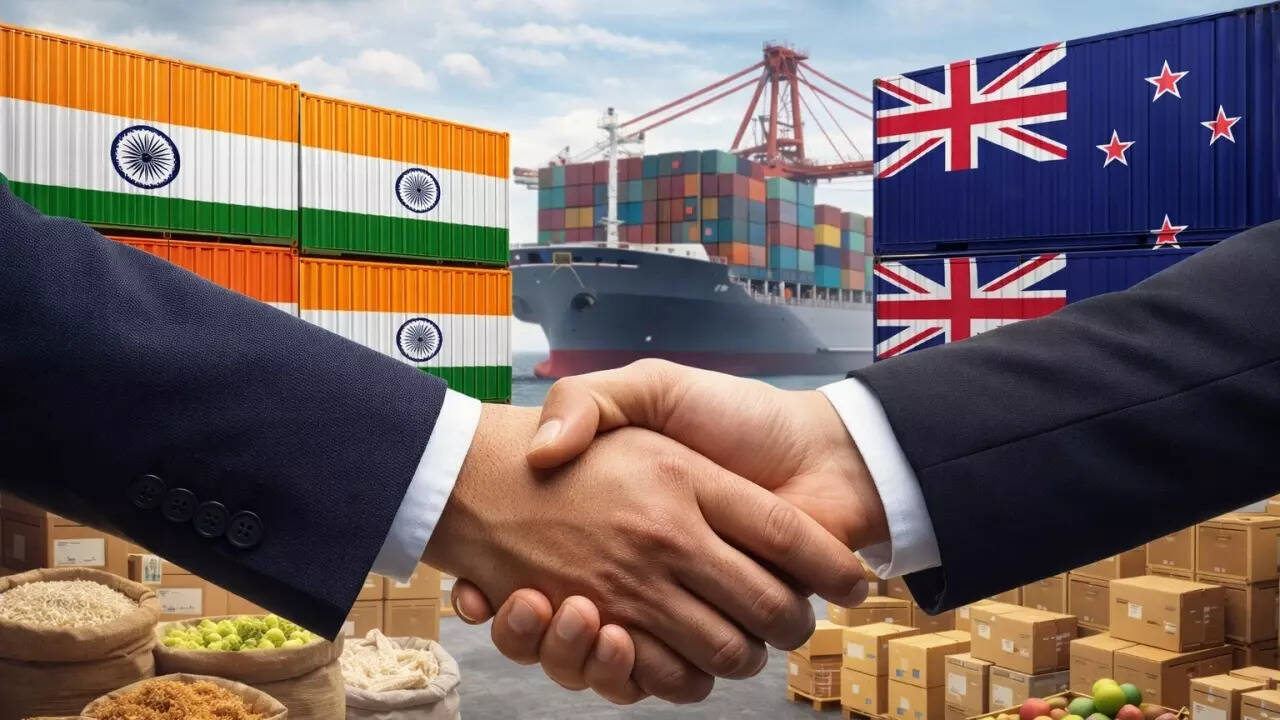
Introduction: When Trade Agreements Become Diplomatic Tests
Trade agreements are often promoted as instruments of cooperation, economic growth, and regional stability. Yet recent public criticism from New Zealand regarding a trade arrangement with India has highlighted how economic deals can quickly evolve into diplomatic challenges. Wellington’s assertion that the agreement is “unfair” has brought rare public disagreement into the open, raising questions about power balance, negotiation transparency, and the future of economic partnerships in the Indo-Pacific.
In a region where diplomacy is traditionally conducted behind closed doors, the episode marks a notable shift in tone and strategy.
The Roots of the Trade Dispute
At the center of the disagreement are concerns raised by New Zealand officials that the trade framework disproportionately benefits Indian exporters while offering limited reciprocal advantages to New Zealand’s core sectors, particularly agriculture and dairy. These sectors are not only economically significant for New Zealand but also politically sensitive, forming the backbone of rural livelihoods and national exports.
From Wellington’s perspective, the agreement falls short of expectations around market access and safeguards. Indian authorities, however, have defended the deal as balanced, pointing to concessions in services, technology cooperation, and long-term strategic alignment.
The divergence highlights a fundamental issue in modern trade diplomacy: agreements are judged not only by aggregate economic gains but by how benefits are distributed domestically.
India’s Expanding Economic Footprint
India’s growing role in regional trade reflects its broader ambition to position itself as a central economic and strategic player in the Indo-Pacific. With global supply chains shifting and multinational firms seeking alternatives to existing manufacturing hubs, India has actively pursued bilateral and multilateral trade partnerships.
However, this expansion has also generated unease among smaller economies. There is a perception that negotiating with a significantly larger market may limit bargaining power, particularly when domestic industries face direct competition from Indian manufacturers and service providers.
For India, balancing ambition with reassurance has become a diplomatic necessity.
Domestic Politics and Public Pressure
Trade disputes rarely exist in a vacuum. In New Zealand, criticism of the agreement has been amplified by domestic political pressure, especially from farming communities concerned about long-term competitiveness. Public scrutiny has made it difficult for policymakers to quietly adjust or reinterpret the deal.
India, too, faces internal considerations. Trade agreements are often politically sensitive, particularly when they involve market access for foreign agricultural products. This mutual domestic pressure reduces flexibility on both sides, making compromise more complex.
From a journalistic standpoint, the episode underscores how internal politics increasingly shape international economic policy.
Indo-Pacific Trade in a Strategic Context
The dispute reflects broader trends across South and Southeast Asia, where trade agreements are now viewed through strategic lenses. Economic partnerships are increasingly tied to geopolitical considerations, supply chain security, and national resilience.
As regional competition intensifies, countries are more willing to publicly challenge agreements they perceive as unfavorable. This marks a departure from earlier eras of globalization, where economic integration was often pursued with fewer political conditions.
In this context, the India, New Zealand disagreement is less an anomaly and more a symptom of changing regional dynamics.
Diplomatic Implications and Regional Signaling
Public criticism risks creating diplomatic strain, even if both governments remain committed to cooperation. How India responds whether through dialogue, clarification, or recalibration will be closely watched by other regional partners.
For New Zealand, the move signals a willingness to assert economic interests more openly, even at the risk of diplomatic discomfort. For India, it presents a test of leadership: whether it can accommodate concerns while maintaining strategic momentum.
The episode sends a broader signal to the region that trade diplomacy is entering a more assertive phase.
Global Lessons from a Bilateral Dispute
Beyond the Indo-Pacific, the dispute offers insights for global trade governance. As economies become more interconnected yet politically fragmented, trade agreements face heightened scrutiny over fairness, transparency, and national interest.
International observers note that successful trade diplomacy increasingly requires not just economic rationale but sustained political communication and trust-building.
Conclusion: Trade Cooperation in a More Competitive Era
The India–New Zealand trade tension may ultimately be resolved through dialogue and adjustment, but its significance extends beyond bilateral relations. It illustrates how economic agreements now operate at the intersection of domestic politics, regional strategy, and global competition.
For the Indo-Pacific, the challenge ahead is clear: fostering economic integration without exacerbating power imbalances or diplomatic mistrust. As nations pursue growth and resilience, the ability to manage such disputes constructively will shape the region’s economic and political future.